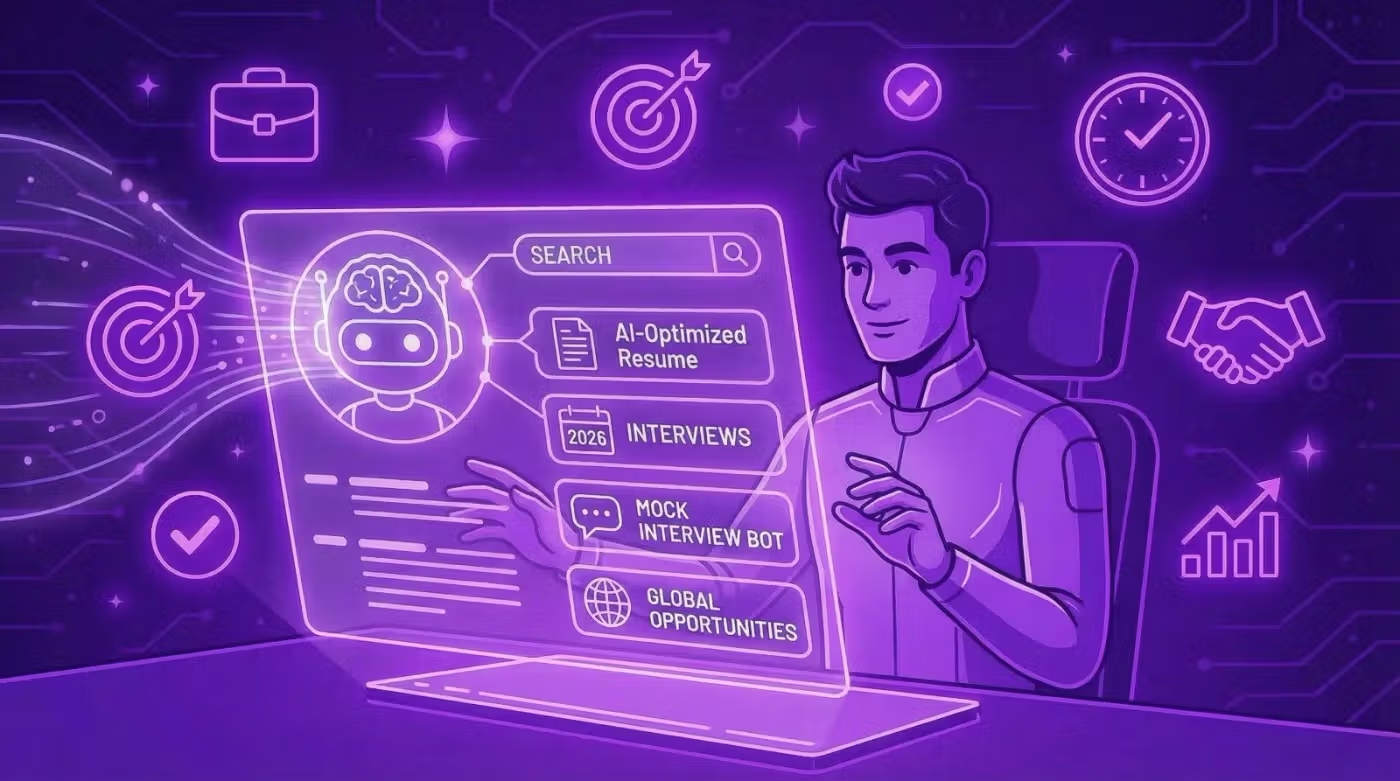
Sarah had sent out 47 job applications in three months. She got two rejection emails and zero interviews. Her resume was solid—or so she thought. Then she tried something different. She used an ai resume writer to rework her entire application package. Within two weeks, she had three interview invitations.
That was early 2025. By mid-2026, Sarah’s story isn’t unusual anymore. It’s becoming the standard.
The job market has shifted. Companies are using AI to screen candidates faster than ever. According to a 2024 survey by the Society for Human Resource Management (SHRM), nearly 70% of large employers now use some form of automated resume screening. If robots are reading your resume, shouldn’t you write it with robot-friendly tools?
1. Why Your Old Resume Isn’t Working Anymore
Let’s be real. The traditional “list your jobs in reverse chronological order and hope for the best” approach is dead. Here’s why.
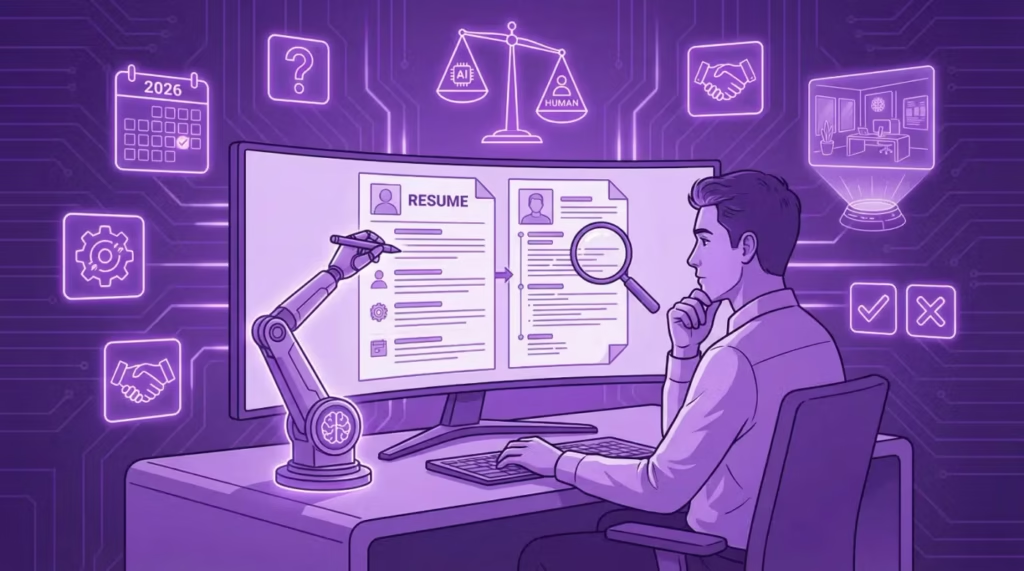
Applicant Tracking Systems (ATS) dominate. A LinkedIn report from 2024 revealed that 85% of resumes never make it past the initial ATS screening. Not because the candidates weren’t qualified—but because the formatting was wrong, the keywords didn’t match, or the file was saved in the wrong format.
Recruiters spend 7.4 seconds scanning a resume. That’s the average. Seven seconds. If your resume doesn’t grab attention instantly, it’s in the trash. And no, a fancy template won’t save you—most ATS software strips out complex formatting anyway.
The game has changed. Both sides—applicants and employers—are using AI. In a survey by Indeed in 2024, 63% of job seekers said they planned to use AI tools in their next job search. The candidates who get hired aren’t necessarily the most qualified. They’re the ones who know how to play the new game.
2. How to Use the Best AI Resume Builder (Step-by-Step)
Using an AI resume writer isn’t about cheating. It’s about leveling the playing field. Here’s exactly how to do it right.
Start With a Cold Draft
Before you touch any AI tool, write down everything. Every job. Every responsibility. Every project. Don’t worry about grammar or formatting. Just dump your brain onto the page. This raw material is gold—because AI can only work with what you give it.
Choose the Right AI Resume Builder (Free or Paid)
There are dozens of options out there, but here’s what you should look for:
- AI-powered keyword optimization: The tool should scan job descriptions and suggest keywords your resume needs.
- ATS-friendly output: If it exports in anything other than plain-text-friendly PDF or DOCX, skip it.
- Customization, not templates: You don’t want a cookie-cutter resume. You want one tailored to your industry and your experience level.
Many platforms offer an ai resume builder free tier that’s surprisingly powerful. You can test drive the features before committing a cent. The key is finding one that analyzes both your background and the job description simultaneously.
Tailor Every Resume to One Job
This is the biggest mistake people make. They send the same resume to 50 companies. AI changes this entirely.
With a good ai resume writer, you can customize your resume for each application in under 10 minutes. Paste the job description, and the AI identifies the top 10 must-have skills. Then it rewrites your bullet points to highlight exactly those skills. It takes the same experience—”Managed a team of 5″—and turns it into “Led a cross-functional team of 5 to exceed quarterly targets by 34%.” Same facts. Better framing.
Don’t Forget the Cover Letter
Most candidates hate writing cover letters. That’s why most don’t write them. But here’s a stat for you: a study by ResumeLab found that 83% of recruiters say cover letters are important in hiring decisions. AI can generate a solid first draft in 15 seconds. You tweak the tone, add a personal anecdote, and hit send. That puts you ahead of 80% of applicants who didn’t bother.
3. What to Watch Out For (Even AI Has Blind Spots)
AI is powerful, but it’s not perfect. Here are the traps to avoid:
The Over-Optimization Trap
Yes, you want keywords. But if your resume reads like a robot wrote it for another robot, human recruiters will spot it immediately. A well-known tech recruiter at Google once said: “We can tell when a resume smells like ChatGPT. It sounds impressive but says nothing real.” Keep the language natural. AI should enhance your voice, not replace it.
Hallucinations and Made-Up Experience
AI models sometimes generate things that sound true but aren’t. I once saw a resume that claimed a candidate “developed a machine learning model that increased revenue by 200%.” When asked in the interview, the candidate had no idea what any of those words meant. Don’t let AI add skills or achievements you can’t back up. Verify everything.
One-Size-Fits-All Resumes
If you use the same best ai resume builder prompt for every application, your resumes will look identical. Recruiters share notes. If three hiring managers at the same company see three nearly identical resumes from candidates in different departments, you’re going to get flagged. Use AI for the heavy lifting, but change the structure, the emphasis, and the tone for each role.

4. The Winning Mindset for 2026 Job Seekers
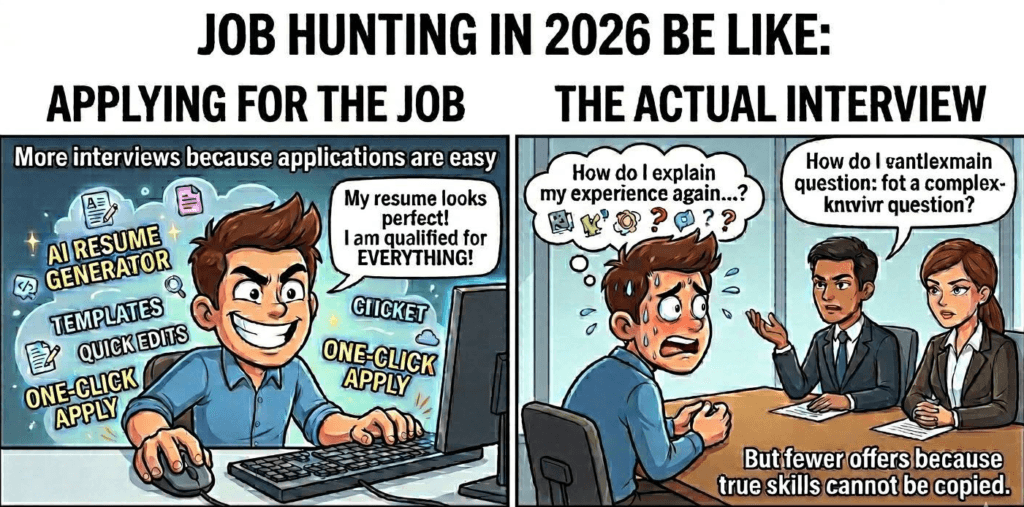
Here’s the truth nobody tells you: a great resume won’t get you the job. It will get you the interview. The interview is where you actually win or lose.
Think of AI as your assistant coach, not your star player. It helps you practice, but on game day, you’re the one playing.
The candidates who land jobs in 2026 aren’t the ones with the fanciest degrees or the longest career histories. They’re the ones who:
- Understand how ATS software actually works
- Use AI to write tailored, data-driven resumes for each role
- Keep their human voice intact throughout the process
- Prepare for interviews with the same AI tools that helped them write their resumes
According to a 2025 report from Zippia, job seekers who used AI to optimize their resumes received 3x more interview callbacks than those who didn’t. That’s not a small advantage. That’s life-changing.
So here’s my advice: stop trying to beat the system. Learn how to use it. The best ai resume builder isn’t a shortcut—it’s a tool. And in 2026, not using it is the real career risk.
Conclusion
Your resume isn’t a document. It’s a sales pitch. And the people reviewing it aren’t reading every word—they’re scanning for signals. AI helps you send the right signals to both machines (ATS) and humans (recruiters).
Start today. Take your raw experience, run it through an ai resume writer, tailor it to one job you actually want, and see what happens. You might be surprised. Sarah was.
Frequently Asked Questions
Is it cheating to use AI to write my resume?
Not at all. Recruiters use AI to screen resumes. Employers use AI for hiring decisions. Using AI to write yours is the same as using spell-check or a calculator. As long as you verify the facts and keep your voice authentic, it’s a smart strategy—not cheating.
What is the best AI resume builder for 2026?
The “best” one depends on your needs. Look for tools that offer ATS keyword analysis, real-time job description matching, and export options readable by screening software. Many have an ai resume builder free tier, so you can test a few before deciding.
Can AI help with interview preparation too?
Absolutely. Many AI resume platforms now include interview coaching features. They analyze your resume, predict likely questions, and help you practice answering them. Same technology, same principle: prepare better, perform better.
Share this article:
Share on Twitter | Share on Facebook | Share on LinkedIn
Related Reading
Related Reading
- Do AI Cover Letter Generators Actually Work? I Tested Them. — Complement your resume with a strong cover letter
- AI for Job Interviews: How to Prepare, Practice, and Ace Your Next Interview with AI in 2026 — Complete your job search toolkit